Lens
Socrates
Questions · Assumptions · Self-knowledge
"Examine the question before chasing the answer."
Socrates helps you examine the beliefs beneath your problem. He does not rush to answer; he clarifies the question.
Reflect through this lens →Eudessa does not pretend to resurrect these thinkers. It uses their lenses as ways of seeing — not voices to imitate.
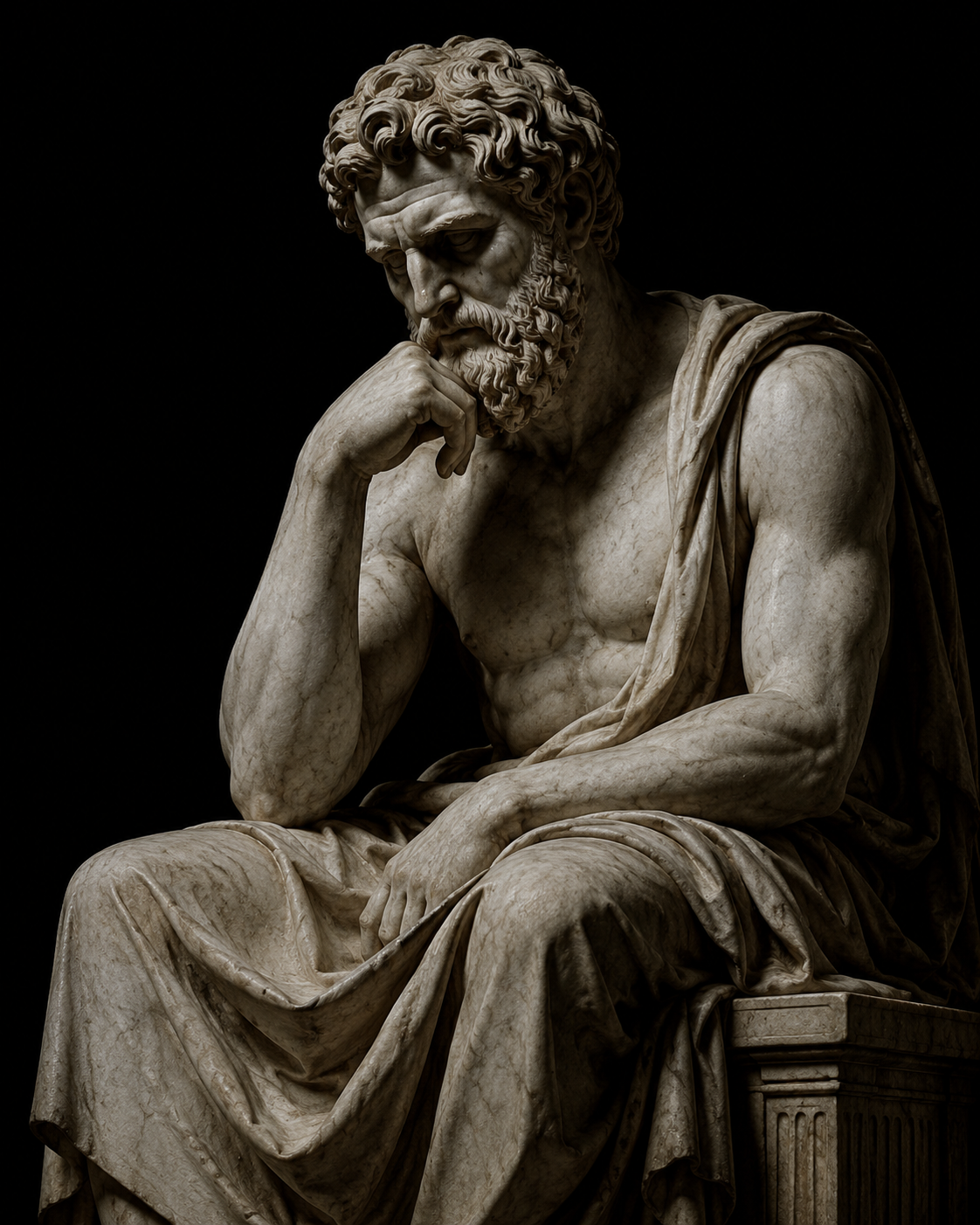
Socrates helps you examine the beliefs beneath your problem. He does not rush to answer; he clarifies the question.
Reflect through this lens →Stoicism helps you separate what is yours from what is not, returning attention to action, character and perspective.
Reflect through this lens →Aristotle brings your attention to the kind of person your repeated choices are forming.
Reflect through this lens →Buddhist thought helps you notice craving, clinging and the stories that intensify suffering.
Reflect through this lens →Taoism asks where you may be forcing life too tightly, and what would happen if you moved with more simplicity.
Reflect through this lens →Nietzsche challenges inherited values, hidden resentment and the fear of becoming who you might be.
Reflect through this lens →Existential thought helps you face uncertainty without pretending life gives easy answers.
Reflect through this lens →Epicurus asks whether you are chasing unnecessary desires at the cost of quieter forms of peace.
Reflect through this lens →Confucian thought explores responsibility, family, social roles and the ethics of becoming dependable.
Reflect through this lens →Kantian thought helps when you need to think through duty, principles and what could be universalised.
Reflect through this lens →The samurai code holds honor, service and the awareness of death as a clarifying knife for what matters.
Reflect through this lens →The Gita and Vedanta distinguish the acting self from the deeper witness behind it, and ask what right action without grasping looks like.
Reflect through this lens →Zen cuts through over-thinking and points to the present moment — what is actually happening before the mind names it.
Reflect through this lens →Sufi thought meets longing, surrender and grief as doorways, and treats the heart as a mirror to be patiently polished.
Reflect through this lens →Ubuntu, from southern African thought, holds that a person becomes a person through other persons — dignity is shared, not solo.
Reflect through this lens →American pragmatism (James, Dewey) tests ideas by what they do in a life, not by what they claim in the abstract.
Reflect through this lens →The Cynics strip away convention and prestige to ask what is actually needed for a free, honest life.
Reflect through this lens →Spinoza holds that understanding the causes of a feeling already begins to free us from being ruled by it.
Reflect through this lens →Schopenhauer is honest about how restless desire fuels suffering, and points to the small reliefs of contemplation and compassion.
Reflect through this lens →Beauvoir takes freedom and ambiguity together, and takes seriously how others' eyes shape who we are allowed to become.
Reflect through this lens →